Importers
Need product and manufacturer evidence, configuration control, packing, import responsibilities and a repeat-order path.
Electric cargo tricycle and utility vehicle program
Application-led electric vehicle programs for dealers, fleets, farms, warehouses, delivery operators and commercial project buyers. Xingtu Brazil starts with the work, surface, route, load, charging condition, maintenance ability and destination, then compares suitable vehicle families and organizes quotation, import, parts and after-sales planning.
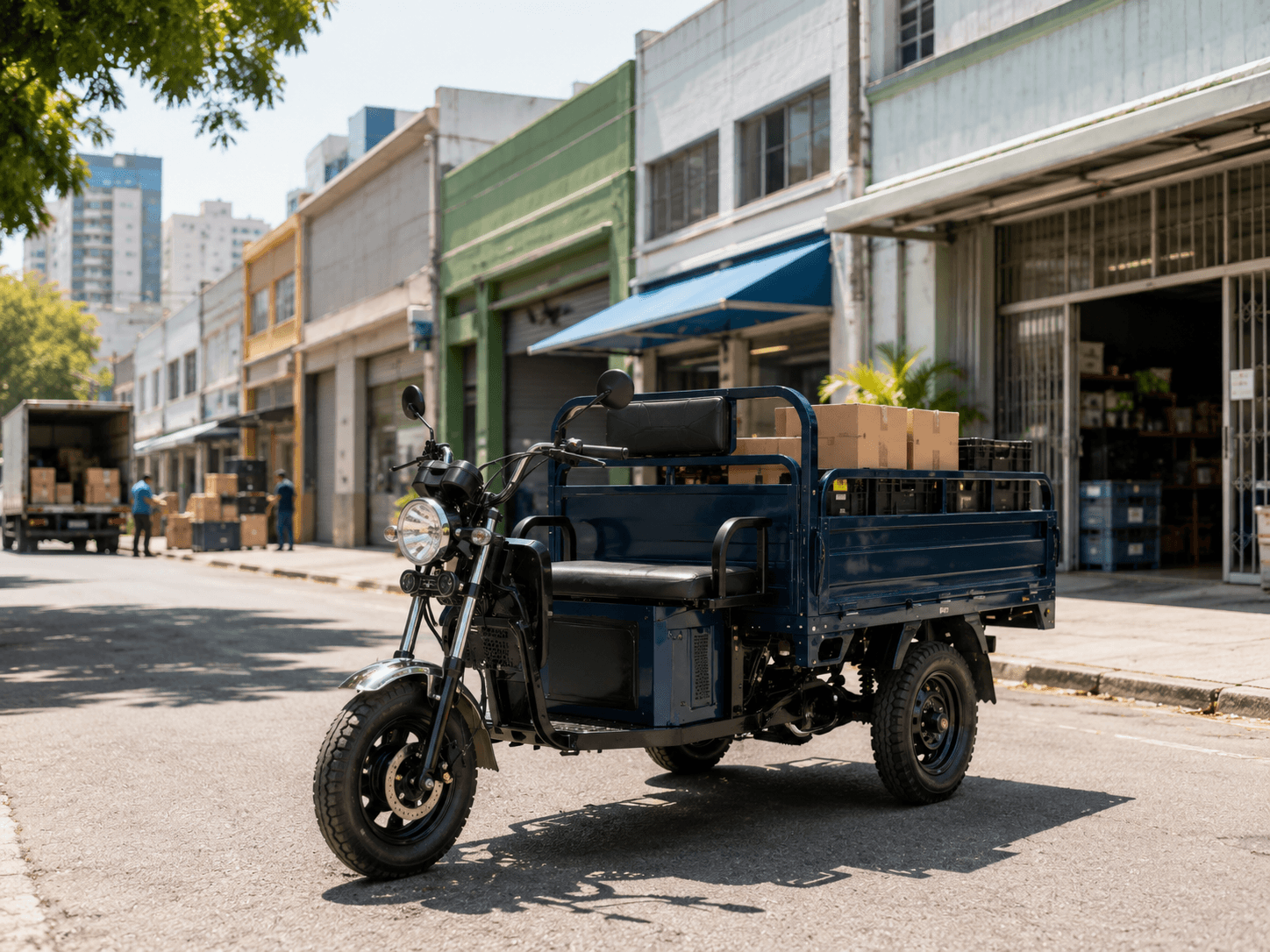
The same vehicle family can create different decisions for a dealer, a farm and a private-site operator. The buyer role determines how samples, branding, parts, delivery and repeat supply should be planned.
Need product and manufacturer evidence, configuration control, packing, import responsibilities and a repeat-order path.
Need a coherent vehicle-family plan, territory logic, parts coverage, dealer support and supply continuity.
Need representative models, display or test units, sales material, parts and clear customer-use boundaries.
Need a commercially understandable range, delivery feasibility and a support route that does not resemble instant online checkout.
Need route, load, operating cycle, charging, downtime, maintenance and replacement-parts planning.
Need vehicle selection around field and yard work, unpaved surfaces, cargo movement, charging access and seasonal use.
Need compact movement, repeated start-stop work, charging discipline, braking review and private-site procedures.
Need controlled-site requirements, lighting, braking, body configuration, maintenance and safety responsibilities.
Need cargo protection, route definition, charging routine, parcel access, weather planning and parts continuity.
Need a defined use case, deployment scope, delivery path and decision process before a vehicle is proposed.
May request one unit, subject to configuration, destination, delivery feasibility, use review and offline commercial confirmation.
A cargo bed, cabin or box is useful only when it matches the route and operating routine. The program therefore maps the work before discussing a representative configuration.
Application examples are qualification directions, not claims that every vehicle is suitable for every surface, load, route or public-road context.
Materials, tools and harvest-related movement across yards, internal roads and clearly described farm conditions.
Feed, supplies, tools and routine loads with surface, slope, weather and charging access recorded.
Defined routes, stops, cargo protection, loading frequency and a practical charging base.
Parcel or store replenishment work where body access, weather protection and route pattern matter.
Repeated loading, short internal movements, durable cargo bodies and maintenance access.
Private-site movement, compact turning, start-stop duty, lighting and charging routines.
Material and maintenance movement inside controlled facilities with safety and operating rules.
Campuses, parks and large properties where access rules and route conditions can be defined.
Tools, waste, supplies and maintenance crews moving within a managed property.
Internal logistics for hotels, resorts or large venues, subject to guest-area and site procedures.
Technicians, tools and replacement material moving on a repeatable service route.
A defined commercial use reviewed against vehicle classification, route and local requirements.
The current catalog and supplier evidence are reviewed against the buyer's brief. A family name describes the intended direction. Exact chassis, body, motor, battery, dimensions, load and options are confirmed only for the selected platform.
A practical direction for material, shop, market, maintenance and farm movement where an open or protected cargo body is needed.
A weather-protection direction for routes or environments where the operator needs more enclosure than an open riding position.
A cargo-protection and access direction for parcels, shop replenishment and defined local logistics work.
A working configuration for agricultural transport, orchards, livestock operations and material movement on documented surfaces.
A controlled-site direction for warehouses, factories, industrial parks, hotels and large properties.
A project direction for higher structural or body demands, subject to a confirmed platform and engineering evidence.
Availability changes with the current supplier catalog and confirmed project. Family descriptions do not promise that every direction is available or combinable on every platform.
The matrix shows which questions guide the vehicle review. It contains no invented payload, range, speed or price values.
| Application | Configuration direction | Operating questions | Planning emphasis |
|---|---|---|---|
| Farm | Reinforced cargo bed, tire and dump review | Surface, slope, load, weather and charging | Spare-parts and maintenance package |
| Delivery | Enclosed cargo box and weather protection | Route, stops, parcel access and charging | Body access and repeatable turnaround |
| Warehouse | Compact private-site configuration | Turning, start-stop work and site rules | Braking, charging and wear parts |
| Wholesale market | Open durable cargo body | Repeated loading, internal route and cleaning | Body durability and easy maintenance |
| Industrial site | Reinforced frame and controlled-site equipment | Route, lighting, braking and safety rules | Parts, training and responsibility plan |
| Property / hospitality | Quiet utility and service-body direction | Guest areas, access, tools and shift pattern | Weather, appearance and controlled use |
Status labels describe the selected platform, not the entire market. A feature can move from optional to project-dependent when body, battery, chassis, packing or compliance constraints change.
Included in the representative base direction for the selected platform, still subject to written model confirmation.
An available option on some platforms that must be selected and quoted.
A dimension that can be adapted within engineering, volume, tooling, approval and commercial limits.
Possible only after the exact vehicle, application, combination, supplier and delivery path are reviewed.
The configuration review prevents a visually attractive body from being paired with the wrong operating system. Each dimension is assigned a default status that is rechecked for the selected vehicle.
Platform structure selected around vehicle family and use; reinforcement is not assumed.
Open, extended or application-specific body direction subject to platform.
Open, semi-enclosed or enclosed operator environment depending on family.
Parcel or protected-load body reviewed for access, route and dimensions.
Matched to the confirmed platform and work requirement; no public power value is invented.
Selected with the motor, battery and intended operating behavior.
Lead-acid or lithium direction where supported by the selected vehicle.
Matched to battery, charging location, input power and operating routine.
Base system confirmed for the platform; operating and classification review still applies.
Road, agricultural or other direction considered against surface and platform.
Base or reinforced direction depends on chassis, body and use evidence.
Vehicle and site lighting scope confirmed for use and selected platform.
Base or optional equipment depending on platform and intended context.
A project option only on compatible chassis and body configurations.
Commercial color selection within supplier and order constraints.
Approved logos, decals and presentation for qualified OEM programs.
Complete or partial packing direction selected for the confirmed delivery plan.
Mirrors, covers, racks or project accessories confirmed item by item.
Status labels do not mean that every feature can be combined. The selected platform, supplier evidence, engineering, order size, packing and use context control the final configuration.
The sequence structures the commercial review; final scope depends on the approved configuration.
A representative concept helps the buyer describe the work without publishing an unstable model list. The next step is to compare current platforms and confirm one configuration in writing.
Final load, dimensions, power and range depend on the selected platform.
Public-road use is not assumed and requires model-specific review.
Unpaved suitability and load remain platform-specific.
The concept does not establish public-road suitability.
Heavy-duty and hydraulic features are project-dependent.
OEM scope and family availability require commercial confirmation.
No concept is an offer, stock promise or confirmed specification. A quotation identifies the exact current platform and written scope.
A dealer OEM program should begin with the intended customers and applications. Vehicle families, representative configurations, optional bodies, batteries, chargers and parts are then organized into a range that the dealer can explain and support.
Brand assets are applied only after the platform and commercial scope are confirmed. Manuals, decals, colors, packaging and dealer materials must remain consistent with the selected vehicle and the responsibilities agreed for the channel.
No confidential supplier, product or brand relationship is disclosed in the public OEM program.
Buyer-provided marks used within an approved artwork and authorization process.
Commercial presentation selected within supplier, paint and order constraints.
Family-level options confirmed against chassis and application.
Packing and localized information planned for the delivery and channel.
Selected around the vehicles, expected maintenance and dealer capability.
Accurate family, option and use-boundary information for the sales team.
Opening range, sample path, optional configurations and reorder logic.
Lead-acid or lithium options may be considered only where the selected vehicle platform supports them. The decision cannot be made from price or claimed range alone. Voltage, capacity, controller, charger, body, route, daily work, temperature and maintenance all affect the proposal.
The charging location should be identified before order confirmation. The buyer should describe grid access, input conditions, shifts, daily distance, downtime tolerance and who will inspect or replace the battery and charger.
Range, charging time and cycle life are not published without a confirmed platform and evidence. The quotation states the applicable configuration and assumptions.
Lead-acid or lithium direction subject to the selected platform and commercial availability.
Confirmed with motor, controller, route and operating cycle.
Matched to battery, input power and charging location.
Used with route, stops, surface, load and reserve rather than converted into a public range promise.
Shift length, start-stop work, loading and breaks guide the selection.
Battery identity, availability, storage and future replacement are planned before scaling.
The sequence structures the commercial review; final scope depends on the approved configuration.
A supported vehicle program records the selected platform and builds a practical parts direction around expected wear, local repair ability and order size. Dealer and fleet buyers should identify who can diagnose faults, replace parts and communicate evidence.
After-sales coordination means receiving the issue, collecting photos or records, identifying the vehicle and part, communicating with the supplier, and coordinating replacement-part or technical information within the agreed scope.
On-site service is not currently offered as a standard service. After-sales coordination does not mean guaranteed nationwide on-site repair.
The website does not complete any of these orders. Every path continues through requirement confirmation, model review, quotation and offline commercial agreement.
A single unit is possible to discuss, but stock, model and delivery are never assumed.
The sample should answer a purchasing question, not become an unsupported deployment.
The range must be commercially understandable and serviceable by the channel.
Scaling follows use-case evidence and may begin with a controlled trial.
The sequence structures the commercial review; final scope depends on the approved configuration.
The commercial plan can evaluate a complete vehicle, a partially assembled vehicle or another packing direction where the selected supplier and platform support it. Container planning, receiving, assembly coordination and parts are then aligned to the buyer and destination.
SKD or CKD language is used only after availability has been confirmed for the selected vehicle. It is not presented as a universal option. The quotation identifies packing, assembly responsibility, documentation and handoff points.
Import route, taxes, classification, documents, packing and delivery terms require written confirmation for the specific order.
Evaluated against size, packing, route, receiving and destination.
Considered only when supported and when receiving and assembly responsibilities are clear.
Organized around confirmed vehicle quantity, dimensions and protection.
Buyer capability, instructions, tools and responsibility defined before delivery.
Packed and identified against the selected vehicle and order plan.
Coordinated for the confirmed import structure, destination and commercial agreement.
The same body style may be evaluated differently depending on where and how it operates. The buyer must identify the actual environment before the vehicle is proposed.
Surface, slope, internal roads, load, weather and site procedures are documented.
Private-site speed, turning, pedestrians, start-stop work and charging are reviewed.
Site rules, lighting, braking, routes, maintenance and operator responsibilities are defined.
Controlled access does not remove the need for safe-use, maintenance and local review.
The exact model, classification, documents, registration requirements and intended route require specific review.
Public-road suitability depends on the selected vehicle, local classification, registration requirements and intended use.
A dealer needs a range and support model; a fleet needs operating evidence and continuity. Both paths benefit from a controlled sequence.
Define buyer role, application, route, surface, load, quantity, charging, destination and decision criteria.
Compare current families and choose representative directions for technical and commercial review.
Use a defined vehicle, route and feedback method when evaluation is needed.
Confirm vehicles, options, quantity, packing, documents, destination and commercial responsibilities.
Identify wear items, batteries, chargers, repair ability and initial parts package.
Coordinate Portuguese communication, receiving, channel questions and issue escalation.
Reconnect feedback and parts demand to the approved platforms before replenishment.
Trial results are specific to the selected vehicle and use. They are not published as a universal performance or total-cost claim.
Instead of publishing dozens of unstable fixed SKUs, Xingtu Brazil shares the relevant current catalog after learning the buyer role, use case, quantity, destination and required family. This keeps model availability and source relationships out of an outdated public list.
A catalog is reference material, not a final quotation, availability promise or proof that every option can be combined.
Yes. A single-unit enquiry is welcome, subject to current model availability, configuration, intended use, destination, delivery feasibility and offline commercial confirmation. The site does not complete the purchase.
The detailed form asks the questions that separate a visually similar vehicle from a commercially suitable one. Provide the intended use, quantity, operating surface, route context, load, daily distance, body, cabin, battery, charging, parts, OEM and destination requirements.
Submitting the form does not complete a purchase or create a final quotation. Model, specification, use suitability, public-road status, availability, price, packing, import, delivery and terms require written confirmation.
The electric-vehicle category is preselected so the specific operating questions are visible.
Send the application, payload, route, surface, shifts, charging, quantity and destination.
Discuss Your Vehicle Requirement