Work definition
Load, route, surface, hours, distance and environment.
Buyer Solution · Fleets & Farms
A fleet or farm should not select a vehicle, battery or equipment package from a single headline specification. The real requirement includes load, route, surface, operating hours, daily distance, charging access, peak periods, downtime tolerance, parts, maintenance and the public- or private-site context. Xingtu Brazil turns that operating evidence into a model direction, trial or sample gate and commercial plan without inventing total-cost claims or universal road legality.
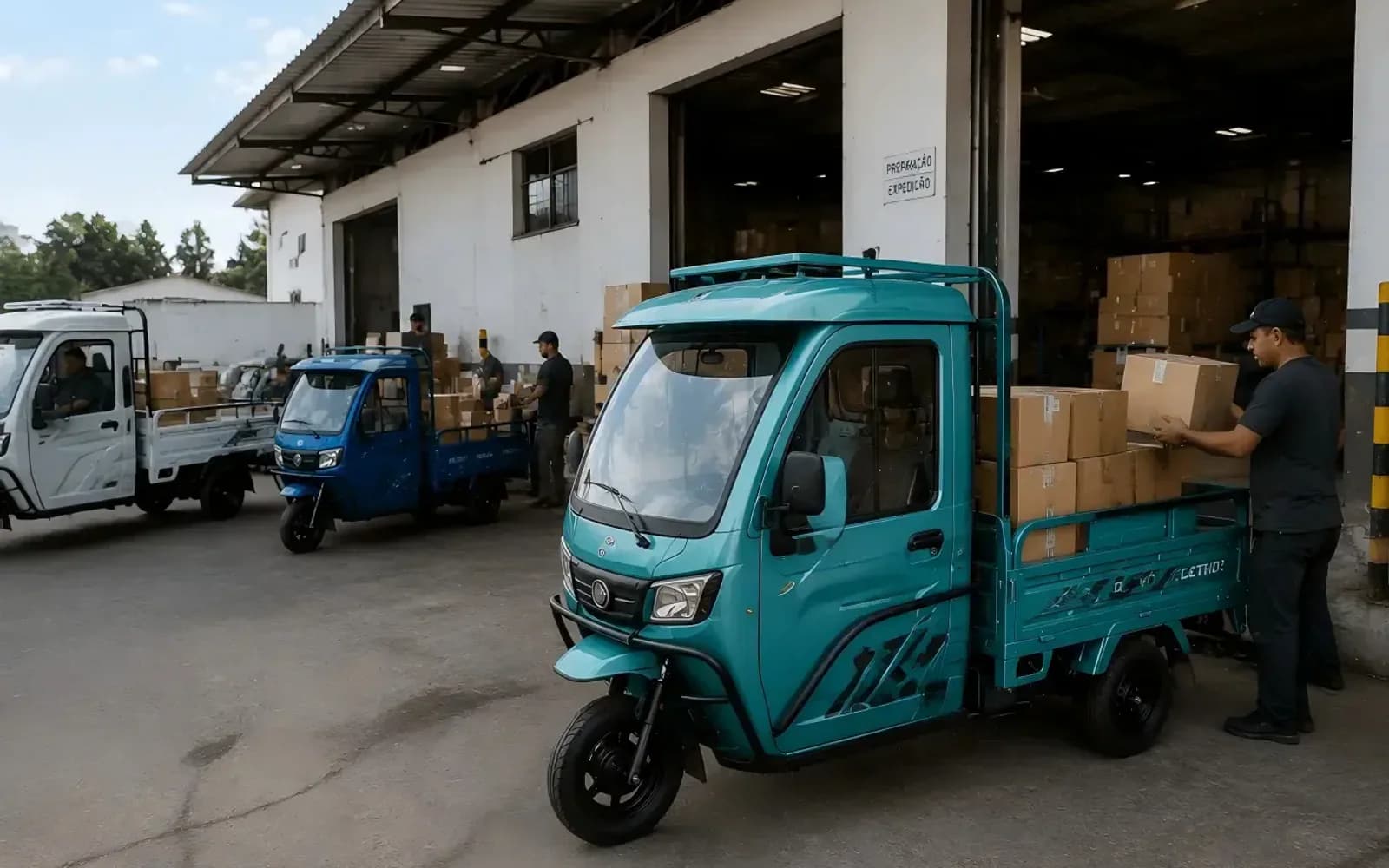
The decision logic and two relevant evidence slots remain specific to this buyer role.
The sequence structures the commercial review; final scope depends on the approved configuration.
The buyer should describe what moves, who operates the product, where it travels, how often it stops, the surface and gradient, weather exposure, loading method, storage and the distance or hours worked. Peak-season and routine use may create different requirements. This operating day is more useful than a broad request for the longest range or highest payload.
Energy and support are part of the same system. Charging location, electrical supply, turnaround, spare batteries where relevant, parking, inspection, local maintenance, critical parts and issue escalation all affect availability. A vehicle that works technically but cannot be charged or repaired within the operating plan is not a complete solution.
The deployment path can start with one unit, a sample or a controlled pilot when the selected platform supports it. The trial needs acceptance criteria and a decision gate; it is not a promise that one result will automatically scale across every route or site.
Load, route, surface, hours, distance and environment.
Charging, downtime, maintenance, parts and operator process.
Single unit, sample, pilot or fleet with a clear next gate.
The matrix captures operating inputs without turning them into invented performance or TCO numbers.
| Use-case area | Buyer evidence | Selection impact |
|---|---|---|
| Load and body | Material, volume, loading method, restraint and frequency | Body and structure direction |
| Route | Origin, destination, stops, turns, gradient and congestion | Platform, maneuverability and duty review |
| Surface | Paved, compacted, farm, warehouse, wet or mixed conditions | Tires, suspension, clearance and use boundary |
| Operating time | Hours, shifts, peak season, idle and turnaround | Energy and availability planning |
| Daily distance | Measured route or representative operating estimate | Battery and charging review input |
| Charging | Grid, location, time window, supervision and backup | Charger and operating procedure |
| Downtime and parts | Critical tasks, acceptable stop time, maintenance and spares | Opening support package and reorder logic |
| Use context | Private site, farm, warehouse or possible public road | Compliance, documentation and route review |
| Trial | What must be proven, duration, data and decision owner | Pilot gate before volume |
No payload, range, speed, charge time, savings or TCO result is inferred from the matrix. The selected model must provide the evidence.
Load, route and surface
Load is more than a weight number. Shape, center of gravity, loading method, body access, restraint, frequency and route determine the practical body direction. The buyer should distinguish normal from occasional demand and identify any hazardous, liquid, food or regulated material that requires specialist review.
Route and surface influence maneuverability, stability, tires, suspension, clearance, braking and maintenance. A warehouse aisle, farm track, private industrial site and public road are not interchangeable. Representative vehicle concepts remain discussion directions until the selected source confirms specifications and use suitability.
Operating hours, distance and charging
Daily distance should come from an actual route, duty record or representative trial rather than a desired range claim. Operating hours, stops, load, surface, temperature, idle time and driver behavior can change energy use. The selected platform provides model evidence; Xingtu Brazil does not publish one range for all configurations.
Charging planning covers location, grid, charger match, time window, supervision, parking and the consequence of a missed charge. Battery preference is evaluated with replacement and parts strategy. Charge time, life and warranty remain model- and use-specific.
A complete energy plan states the assumptions and the validation gate.
Downtime, parts and maintenance
The fleet should classify critical tasks, acceptable downtime, wear items, local maintenance ability, tools and escalation contacts. An opening parts package can be reviewed for the selected vehicle family, but part numbers, compatibility, stock and price require model confirmation.
Maintenance intervals, warranty and repair methods come from the selected platform and written terms. Xingtu Brazil coordinates parts and after-sales communication but does not offer standard on-site service or guarantee a remedy before evidence review.
Total operating logic
A responsible comparison can list purchase scope, import and delivery, charging infrastructure, operator training, stock, parts, maintenance, downtime, expected use and replacement planning. Those inputs help the buyer build its own financial model from confirmed quotations and real operating data.
Xingtu Brazil does not fabricate fuel savings, labor savings, depreciation, utilization, resale value or total-cost figures. Any economic case must state assumptions, measurement period, taxes, financing and scenario risk.
The website supplies a decision framework, not a guaranteed return-on-investment calculation.
Trial, sample and use compliance
A useful pilot has route, load, surface, charging, operator, duration, maintenance and evidence criteria. The buyer identifies who accepts the result and what triggers revision, additional testing, scale or stop. One unit can be evaluated when the selected product and commercial terms allow it.
Private-site suitability does not establish public-road legality. Classification, registration, documentation, local rules and intended use require model-specific review. A public page cannot confirm legal use for every municipality, route or configuration.
The fields below follow this page’s specific decisions and record the lead before offering WhatsApp.
Share load, body, route, surface, hours, distance, charging, downtime, parts, maintenance, use context, quantity and destination.
Vehicle and battery programs use different evidence but the same requirement discipline.
Vehicle families, configuration statuses, order paths, parts and compliance boundaries.
Build a vehicle requirementMission-led battery, BMS, charger, sample and continuity planning.
Build a battery requirementLocal receiving, stock, delivery, parts and after-sales coordination.
Review local capabilityNo. Load shape, route, surface, hours, distance, charging, maintenance, parts and use context must also be reviewed.
Share load, body, route, surface, hours, distance, charging, downtime, parts, maintenance, use context, quantity and destination.
Send Your Fleet or Farm Use Case