
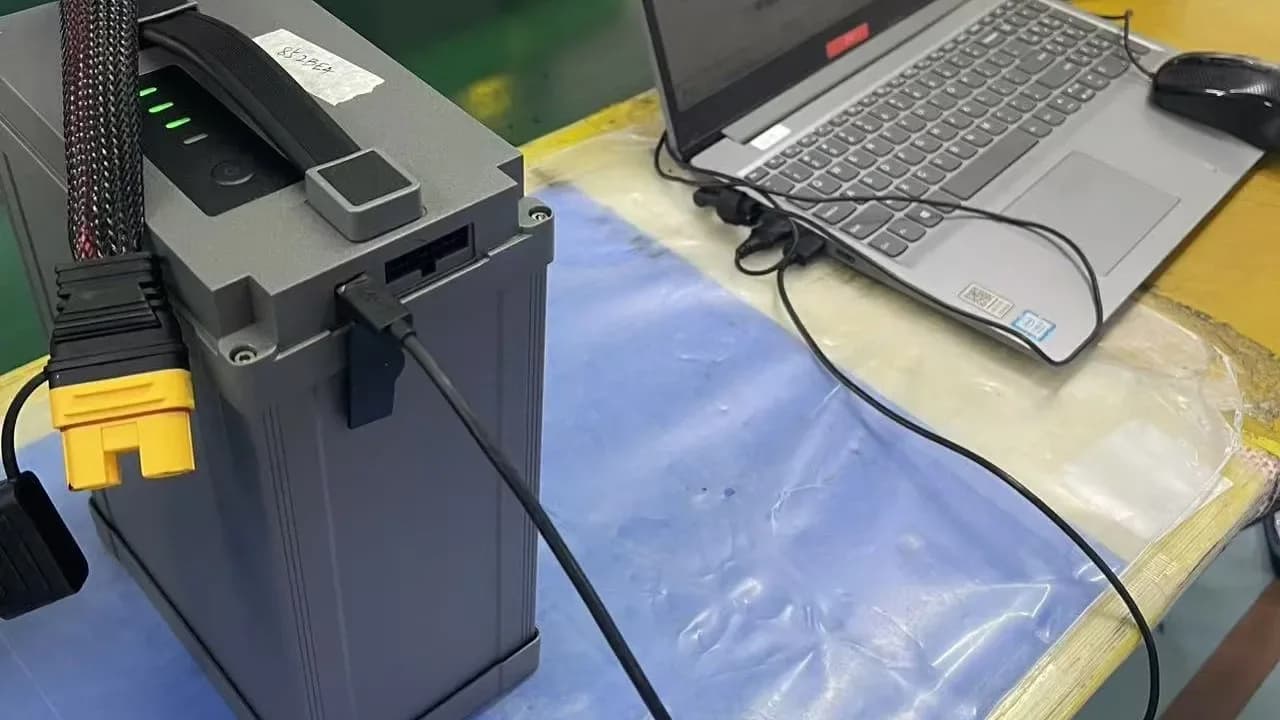
Know each battery
Number or label every battery and keep a simple record: purchase date, cycles, incidents and the drone it works with. Rotate the batteries evenly so a few units do not age faster than the rest, and take out of service any battery with a damaged casing, swollen cells or burnt connectors.
- Label or number every battery.
- Log cycles and incidents.
- Rotate evenly across the fleet.
Checks before and after the season
Before the season, inspect casings, connectors and cables, test every charger and pay attention to warnings from the battery management system (BMS). After the season, store the batteries at the charge level and temperature the manufacturer recommends, away from heat and moisture, and check them again before the next season starts.
Document problems properly
When a battery fails, the quality of the information decides how fast the case moves. Record the drone model, the battery label, the number of cycles, photos of the connectors and any damage, the error messages and how and when the problem happened. Any warranty assessment depends on the manufacturer's analysis, and complete information speeds it up.
- Drone model and battery label.
- Cycles and date of the incident.
- Photos of connectors, casing and error messages.
- Description of the flight or charge when it failed.
Damaged batteries: transport and disposal
A swollen, punctured or burnt lithium battery is dangerous goods. Under IATA special provision A154, a lithium battery that is damaged or defective in a way that affects safety is forbidden on aircraft, passenger or cargo. Do not send it anywhere before agreeing the route with the supplier: the analysis usually starts from photos and records, and moving it by road needs packaging and documents for dangerous goods. For disposal, the National Solid Waste Policy (Law 12,305/2010, art. 33) requires manufacturers, importers, distributors and traders of batteries to run reverse logistics, so used batteries go back through the supply chain and not into common waste.
- Keep a damaged battery apart, in a ventilated place away from anything that burns, and follow the manufacturer's instructions.
- Never send a damaged battery by air.
- Agree the road transport first: it needs dangerous-goods packaging and documents.
- Return used batteries through reverse logistics, not with common waste.
Plan replacements before the busy weeks
Batteries come from production and import, so replacements need time. Use the season calendar to decide when to order, and size the reserves with the number of drones, flights per day and charging time, so that a unit leaving the rotation does not stop the team.
Where XT Brazil fits
XT Brazil supplies agricultural drones and batteries as one project, with chargers and parts in the same order. It coordinates after-sales in Portuguese from São Paulo and passes documented cases on to the manufacturer. There is no regular stock of drones or batteries in Brazil, and compatibility with drones you already own is reviewed case by case.
- Author
- XT Brazil Editorial Team
- Updated
- Oct 23, 2026
- Sources
- Related page
- Agricultural drones and batteries