
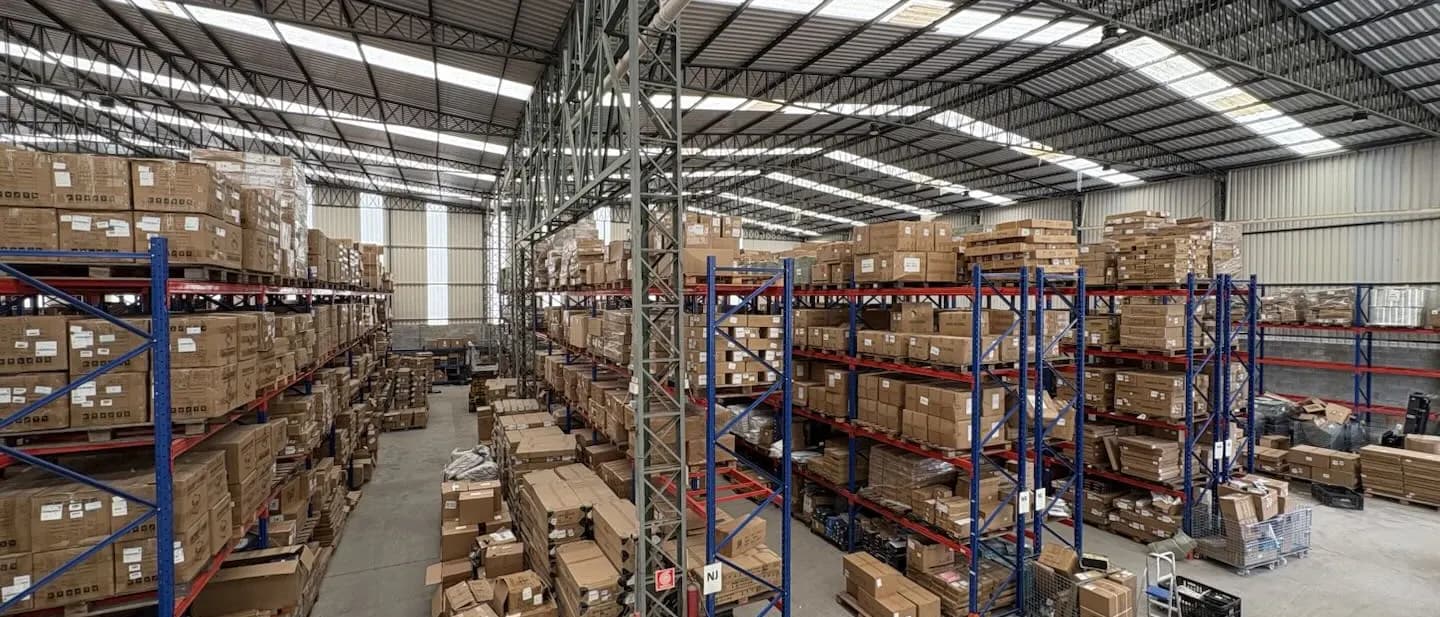
What changes between the two routes
The unit price is the first thing buyers compare, but it is rarely what decides the result. Lead time, minimum quantity and the cash tied up until the goods arrive matter just as much, especially for a first order or a product the market has not tested yet.
- Lead time: stock in São Paulo usually ships within days; from China, add production time to the import itself.
- Quantity: from stock, often from one carton per product; from a factory, the supplier's minimum order.
- Cash: from stock, you pay for what you take; when importing, the money is tied up until the goods arrive.
- Unit cost: usually lower when importing, because the factory price is lower and volume spreads freight and the fixed costs of each shipment (customs broker, Siscomex fee, terminal).
When Brazil stock is the better choice
Local stock works best when you need to learn before you commit. A new product, a new channel or a seasonal window does not leave room for a long import cycle, and a wrong bet with a full container is expensive. Buying a few cartons lets you see real sell-through, returns and customer questions before you invest more.
- Testing a product or a channel
- Restocking fast to avoid a stock-out
- Seasonal sales with a short window
- Limited working capital
When importing from China starts to pay off
Importing makes sense once demand is predictable. If a product sells every month, buying it at the factory gives a lower price per piece and spreads freight and the fixed costs of each shipment over more units. Import taxes are a percentage of the value, so they do not get smaller with volume. Importing is also the route when you want changes that stock cannot offer: your own brand, packaging, colors or a specific specification.
- Sales proven over several months
- Volume that justifies a factory order
- Own brand, packaging or custom specification
- Capital and storage space for the import cycle
The numbers that belong in the comparison
Comparing the factory price with the stock price is misleading. The fair comparison is the landed cost: the product delivered to your warehouse with taxes paid and an invoice issued. On the import side, that includes freight, insurance, import taxes, customs fees, port costs and inland transport. On both sides, add the cost of money tied up and the risk of goods that do not sell.
- Landed cost per unit, not factory price
- Months of cash tied up in the import cycle
- Risk of slow-moving or unsold stock
- Quality problems and how they are solved
How long your money is tied up
A hypothetical timeline, to show the difference rather than to quote terms. From Brazil stock, you pay before dispatch and the goods usually leave within 3 days, so the money comes back as soon as you sell. When importing, factories commonly ask for a deposit with the order and the balance before shipment, production takes weeks, the import takes about 50 days from the factory to clearance in Brazil, and the import taxes are paid at clearance. The money can be tied up for two to three months before the first sale.
- Stock: pay before dispatch, receive within days
- Import: deposit with the order and balance before shipment (common factory terms)
- Import: taxes and fees paid at customs clearance
- Import: about 50 days from the factory to clearance, plus production time
A route that combines both
Many buyers use the two routes in sequence. They start with a few cartons from stock, measure what sells in their channel and then import the best sellers. While the import is on its way, local stock covers the gap, so the shelf or the listing never goes empty. A shared container makes the first import smaller, because you do not need to fill a container on your own.
- Test with cartons from local stock
- Measure sales, returns and margin
- Import the winners in a shared container
- Keep local stock as a buffer during the import
Common mistakes in a first import
Most first imports that go wrong fail for reasons that could be checked before ordering. The product sold well somewhere else, but not in the buyer's own channel; the order spread across too many models; or the certification, the labeling or the lead time took the buyer by surprise. Testing with local stock first removes the biggest of these risks, because you only import what has already sold in your channel.
- Importing too many models at once
- Choosing by unit price alone
- Forgetting mandatory certification or Portuguese labeling
- Underestimating production and import time
- Skipping the inspection before shipment
How XT Brazil works on both sides
XT Brazil keeps stock in São Paulo, sold from 1 carton per product, usually dispatched within 3 days, with a Nota Fiscal on every sale. When a product is ready to be imported, our team in China sources and inspects it, and small lots join the shared container that leaves every month, from about 5 m³. The import takes about 50 days from the factory to customs clearance in Brazil, and you buy from a Brazilian company, paying in reais.
- Author
- XT Brazil Editorial Team
- Updated
- Oct 23, 2026
- Sources
- Regulamento Aduaneiro (Decreto 6.759/2009), art. 77: valor aduaneiro
- Lei 10.865/2004: PIS/Pasep-Importação e Cofins-Importação
- IN RFB 2.024/2021: valores da Taxa de Utilização do Siscomex (resumo AASP)
- Inmetro: registro de produtos e avaliação da conformidade
- Código de Defesa do Consumidor, art. 31: informações em língua portuguesa
- Related page
- Brazil stock