Why a private label in cleaning tools
These are repeat purchases with steady demand, so a line that works keeps selling. A private label helps you hold your price when the same generic product appears from several sellers, and it lets you build a family (mop, bucket, refill, brush) that customers buy together. The risk is buying a large first order of something your channel does not want, which is why the starting point matters.
Start with what you already sell
Pick one to three items with proven sales in your channel. Set the selling price you need and work back to the cost you can pay, including freight, taxes and packaging. Compare with what you buy today in Brazil: if the gain is small, the brand alone may not justify an import.
- One to three items to begin
- Target selling price first, cost second
- Compare with your current local supplier
The three levels of customization
Level one is your brand on the packaging and label, on a product the factory already makes. Level two changes colors, handle, bristles or accessories. Level three changes the structure itself, which may need a new mold or mechanism, with tooling cost and a longer lead time. The minimum order usually grows at each level, per item and often per color.
- Level 1: brand on packaging and label
- Level 2: colors, materials and accessories
- Level 3: new mold or mechanism
Minimum quantity, sample and approval
Ask the factory for the minimum quantity per item and per color, and for a pre-production sample. Approve the sample in writing together with a specification: materials, weights (and fabric weight in g/m² for cloths and microfiber), dimensions, color references, packaging and carton. Before shipment, inspect the goods against the approved sample; that is what protects you if the production differs.
Packaging and labels for Brazil
Brazil's Consumer Protection Code requires correct, clear and visible information in Portuguese about the product, including characteristics, quantity, composition, warranty and origin. Plan the label from the start: product name, contents, materials, instructions, origin and the identification of the importer. If you sell in retail or on marketplaces, you will also need barcodes, a sturdy master carton and photos and descriptions for the listing. If you plan to use Mercado Livre Full, check its current rules first: since May 2026, Full blocks extra-large items (for example, any side over 80 cm) in a list that includes cleaning mops, squeegees and broom handles.
- Information in Portuguese on the product or packaging
- Importer identified on the label
- Barcodes for retail and marketplaces
- Master carton that survives storage and transport
Lead times and costs that change the numbers
A private-label order takes longer than buying from stock. Count the time for the sample and its approval, the production, the inspection and the import, which from the factory to customs clearance in Brazil usually takes about 50 days. If the project needs a new mold, its cost has to be spread over the first orders. Freight, import taxes and packaging also go into the unit cost, so compare the final landed cost, not the factory price.
- Sample and approval before production
- Production, inspection and about 50 days of import
- Mold cost spread over the first orders
- Compare landed cost, not factory price
When an item needs more care
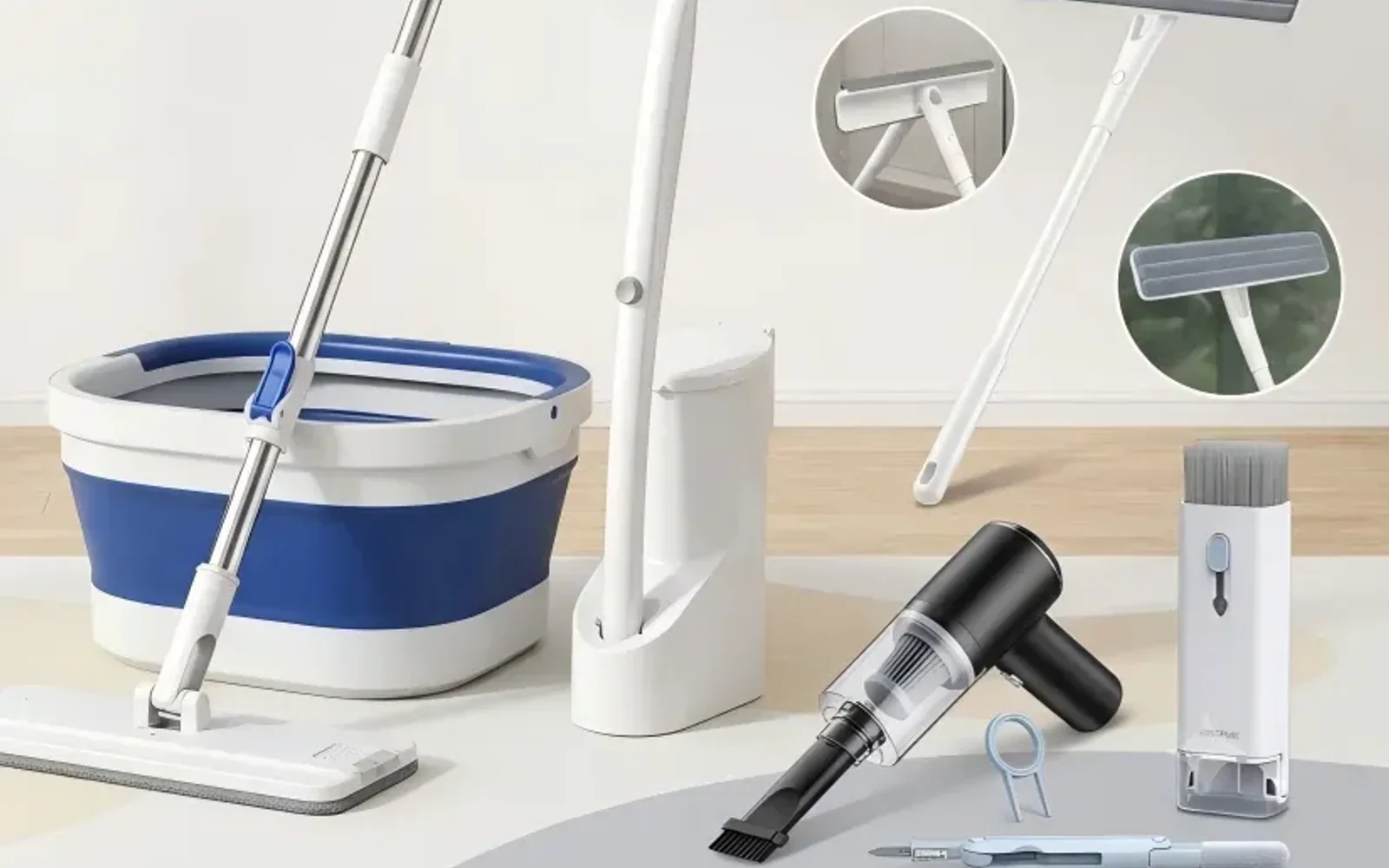
Simple mechanical tools such as brooms, squeegees, mops and buckets do not usually fall under compulsory certification, but confirm it for each item on Inmetro's list of regulated products. Items with a motor, battery or charger, such as electric mops or handheld vacuums, may need Inmetro certification and, if they have wireless communication, Anatel approval. Cleaning chemicals are a separate category (saneantes) regulated by Anvisa, with notification or registration of the product and an authorized company; those are reviewed case by case.
Test the market before you scale
A good way to reduce risk is to test the item before customizing it: sell a similar product from stock, look at the questions and returns, and only then order your own version with the changes your customers asked for. The first private-label order can be small and mixed, and the next one grows with your sales.
Where XT Brazil fits
XT Brazil moves about four containers of cleaning tools a month and keeps stock in São Paulo, so you can test items before ordering your own version. Private-label projects are reviewed one by one, with written specifications, inspection before shipment, formal import and a Nota Fiscal in Brazil. Chemical products are reviewed case by case.
- Author
- XT Brazil Editorial Team
- Updated
- Oct 23, 2026
- Sources
- Código de Defesa do Consumidor, Lei nº 8.078/1990 (art. 31, informações em língua portuguesa)
- Inmetro: registro de produtos e avaliação da conformidade
- Anvisa: saneantes
- Anatel: certificação e homologação de produtos
- Full: produtos extragrandes bloqueados desde 20/05/2026, incluindo esfregões e rodos (OMIQ, 2026)
- Related page
- Cleaning supplies from China