
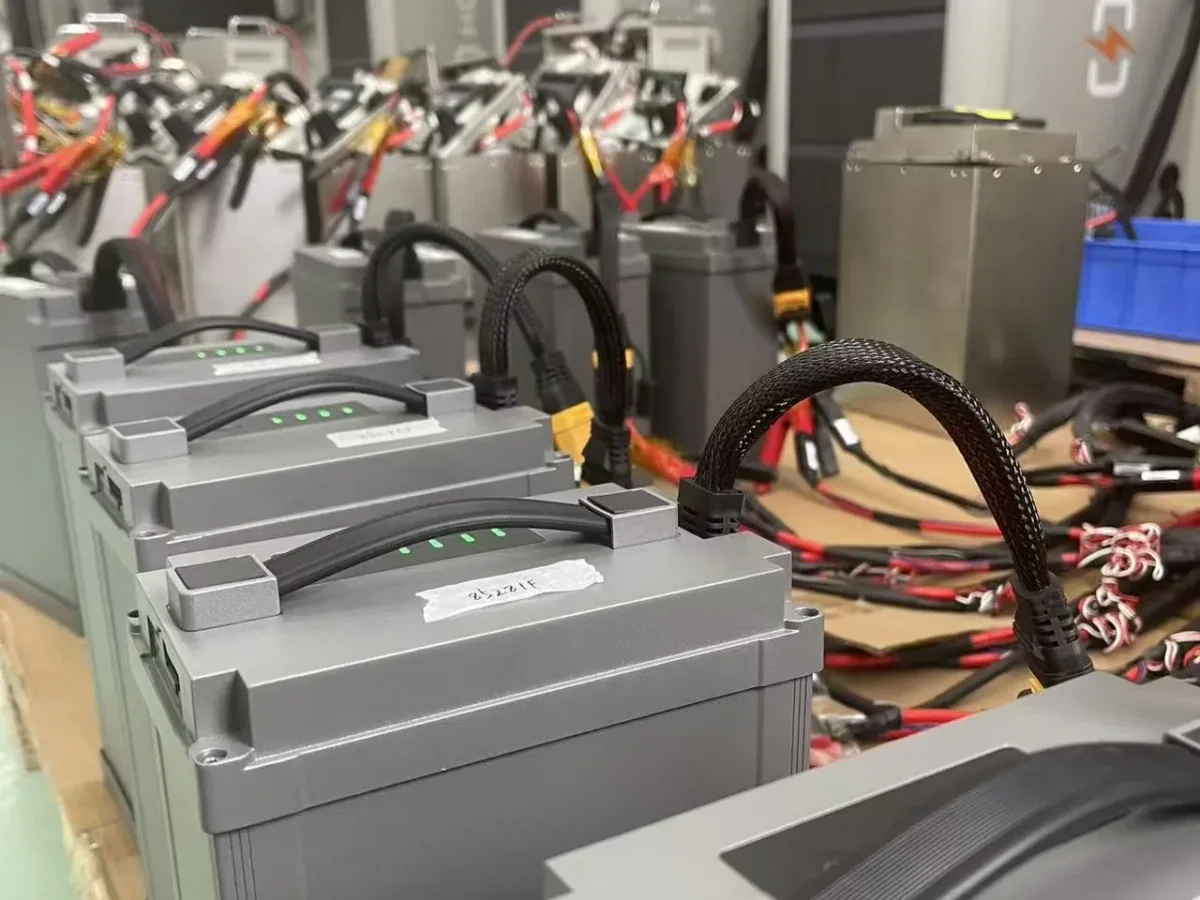
The real cost appears when the drone stops
A service provider may accept a higher unit price if a failed battery can be swapped at once in a busy season. Waiting for a new production run and import can interrupt jobs and delay customers in exactly the period when drones are needed most.
- Lost spraying days can cost more than a battery discount.
- A battery failure affects the whole team's schedule.
- Replacement time is part of the purchase decision.
Put a number on a lost day
A quick way to compare is to work out what one day without the drone costs and set it next to the price of a reserve battery. The revenue lost in a day is roughly the area the team sprays in a day multiplied by the price it charges per hectare. Add any penalty or customer the contract could cost you.
- Cost of a lost day ≈ hectares sprayed per day × price per hectare.
- Days lost ≈ the time a replacement battery takes to reach the field.
- If one reserve battery costs less than those lost days, the reserve is the cheaper option.
- Example with made-up numbers: 80 ha a day at R$ 60 per hectare is about R$ 4,800 of revenue for each day stopped. Use your own figures.
Why a replacement cannot simply be flown in
A drone battery is a large lithium-ion battery. Shipped on its own, it counts as dangerous goods (UN 3480): under the IATA rules it is forbidden as cargo on passenger aircraft, may fly only on cargo aircraft at a state of charge of no more than 30%, and needs dangerous goods packaging, labels and documents. The other route is by sea, which takes weeks. In practice, a battery that fails in the middle of the season is replaced from the reserves already on the farm, or the team waits.
- Lithium-ion battery shipped on its own (UN 3480): cargo aircraft only, at 30% charge or less.
- Dangerous goods packaging, labels and documents are required.
- A damaged or defective battery cannot travel by air at all.
- So the reserve has to be on site before the season, not ordered when a unit fails.
Operators need a replacement plan, not only a purchase
Service providers and farms that fly every day should decide before the season how many reserve batteries they keep, how they track battery health and when they reorder. Batteries are produced and imported to order, so a reserve bought with the project is what keeps the team flying when a unit fails.
- Keep a record of cycles and health for each battery.
- Confirm compatibility in writing before ordering.
- Use the season calendar to plan the next order.
How XT Brazil plans the batteries
XT Brazil supplies agricultural drones and batteries as one project. The battery plan starts with the drone model, the expected use and the number of reserve batteries to buy with the project. There is no regular stock of drones or batteries in Brazil, and compatibility is checked case by case.
- Author
- XT Brazil Editorial Team
- Updated
- Oct 23, 2026
- Related page
- Agricultural drones and batteries