
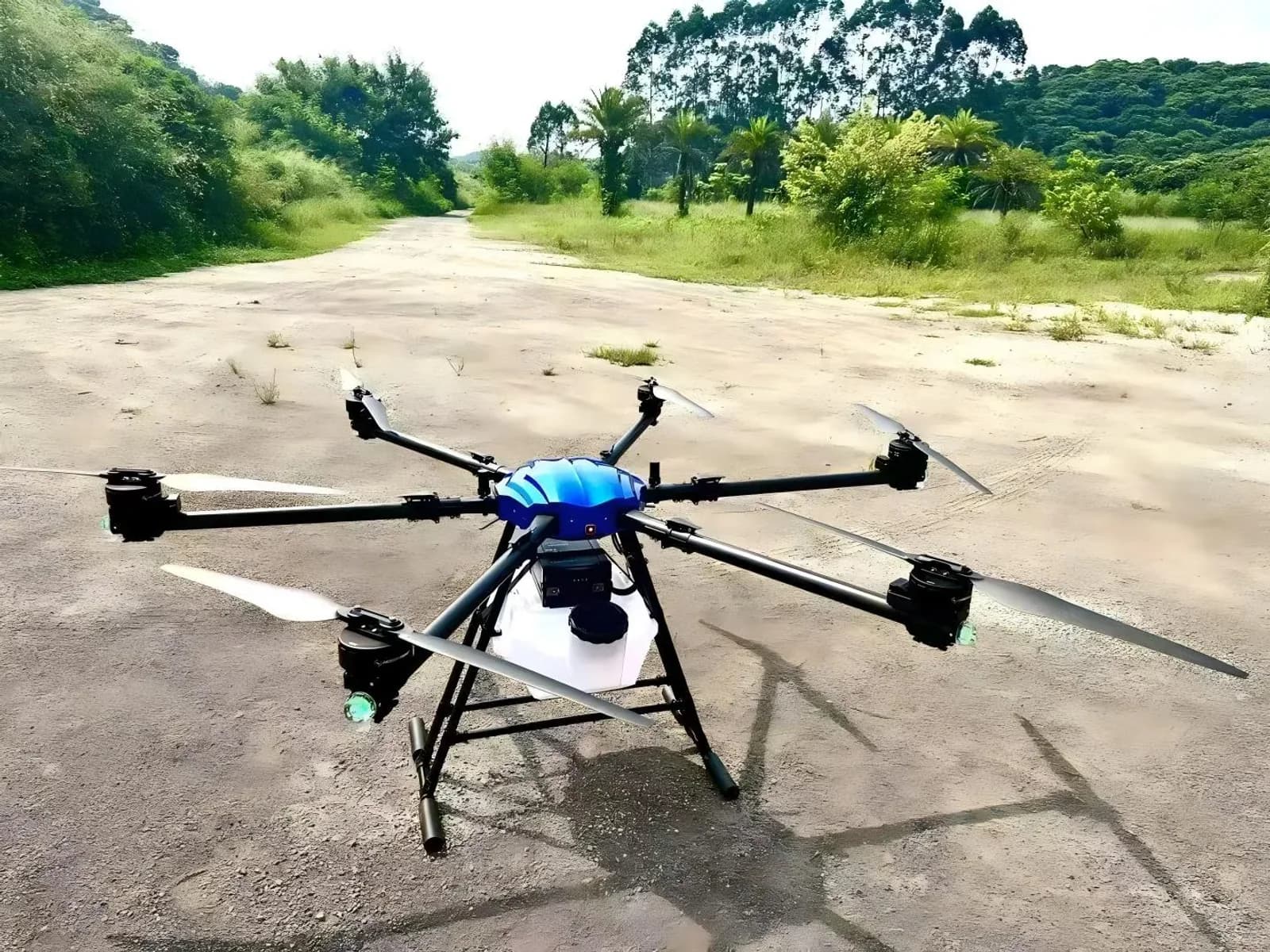
Four authorities, one operation
Spraying with a drone sits where agriculture and aviation meet. MAPA regulates the application of pesticides, fertilizers and seeds; ANAC regulates the aircraft and the pilot; Anatel approves the radio equipment; and Decea controls access to the airspace. On top of that, pesticides are sold and applied with an agronomic prescription.
Who is who in the operation
The rules use different names for different roles, and one person may hold more than one. The operator is the farm, company or cooperative that runs the operation and holds the MAPA registration. The remote pilot flies the aircraft and must pass ANAC's theory exam (mandatory from 1 January 2027). The remote aerial applicator has the CAAR course required by MAPA. A company also needs a technical manager, an agronomist or forestry engineer. Define these names before buying, because each registration asks for them.
MAPA: operator registration and the CAAR course
MAPA Ordinance 298/2021 requires anyone operating drones to apply pesticides, fertilizers, inoculants, soil correctives or seeds to register with MAPA through the SIPEAGRO system. That includes farmers, rural companies, cooperatives and service providers. Registration requires an applicator who has completed the remote aerial application course (CAAR, at least 28 hours) and an aircraft in good standing with ANAC; companies also need a technical manager who is an agronomist or forestry engineer. The ordinance keeps applications at least 20 meters from sensitive areas such as villages, isolated homes, animals and water sources, requires signage, a fire extinguisher suitable for electronic equipment, first aid and protective equipment, and asks for records of every application plus a monthly report. A farmer who owns a drone may use it only on their own property.
- Operator registered in SIPEAGRO
- Applicator with the CAAR course
- Records of every application, kept for at least two years
- Monthly report by the 15th of the following month
ANAC: aircraft registration and pilot exam
In June 2026 ANAC published RBAC 100 (Resolution 805/2026), which replaced the previous drone regulation. Every unmanned aircraft must be registered with ANAC and linked to a person with a Brazilian CPF or CNPJ; the registration is valid for 24 months and its number must be displayed on the aircraft. Operations are classified by risk as open, specific or certified. The open category is limited to aircraft of up to 25 kg flown in visual line of sight, up to 120 meters and away from people, so many spraying drones, which weigh more than 25 kg with a full tank, fall into the specific category, under a standard scenario published by ANAC or an authorization after a risk assessment. Every remote pilot must pass ANAC's theory exam; Resolution 805/2026 waives this until 31 December 2026, so it applies from 1 January 2027. Third-party insurance is required, with an exemption for applying pesticides, fertilizers and seeds over uninhabited areas in visual line of sight up to 120 meters. For what was in place before the change: acts issued under the old RBAC-E 94 remain valid until ANAC revokes them, and operations authorized up to 15 June 2026 that fall in the specific category without a standard scenario have two years from the resolution's publication to obtain an operational authorization.
Anatel: approved radio equipment
The remote control, telemetry and video links use radio frequencies, so the equipment must be certified and approved by Anatel. Check the approval of the exact model before importing it: unapproved telecom products can be held at customs and cannot be sold legally.
Decea: airspace
Since 1 July 2026, under Decea's ICA 100-40 (Portaria DECEA 2.094/DNOR8), every drone operation must be requested through the SARPAS system; only recreational flights in areas designated for recreation are exempt. Agricultural application in the specific category, with an aircraft over 25 kg, in visual line of sight up to 30 meters and over uninhabited areas, can be requested at least 30 minutes in advance; other operations may need several days' notice. Make the SARPAS request part of the routine of every operation.
Agronomic prescription and the label
Law 14,785/2023 requires pesticides to be sold to users with an agronomic prescription issued by a qualified professional, and the MAPA ordinance requires the application to follow the label and the prescription. Keep the prescription with the records of each operation.
Documents that come with the drone
Ask for the documents of each model before the order: the technical sheet and manual, the radio approval, and for the batteries the safety data sheet and the UN 38.3 test report needed to ship lithium batteries. Keep them with the aircraft records; ANAC, MAPA and the insurer may ask for them, and the after-sales team will too.
A checklist before buying
Before the drone arrives, confirm who will be the operator, who will fly and who will be the technical manager.
- Operator registration in SIPEAGRO planned
- Applicator and pilot trained (CAAR and ANAC exam)
- Aircraft registered with ANAC and its number displayed
- Radio equipment approved by Anatel
- SARPAS request (Decea) for each operation
- Insurance, when required
Where XT Brazil fits
XT Brazil buys and exports agricultural drones in China by project, together with batteries, chargers and parts, and checks the technical sheet and transport documents of each model before the order. Registrations, training and authorizations are the operator's responsibility; XT Brazil does not provide spraying services or issue licences.
- Author
- XT Brazil Editorial Team
- Updated
- Oct 23, 2026
- Sources
- Portaria MAPA nº 298/2021 (aplicação com aeronaves remotamente pilotadas)
- ANAC: RBAC nº 100, Emenda 00
- ANAC: Resolução nº 805/2026 (transição e prazo do exame teórico)
- Decea: ICA 100-40 (Portaria nº 2.094/DNOR8, em vigor desde 1º/07/2026)
- Ministério de Portos e Aeroportos: novas regras para drones (ago. 2026)
- Anatel: certificação e homologação de produtos
- Lei nº 14.785/2023 (agrotóxicos e receituário agronômico)
- Related page
- Agricultural drones and batteries