
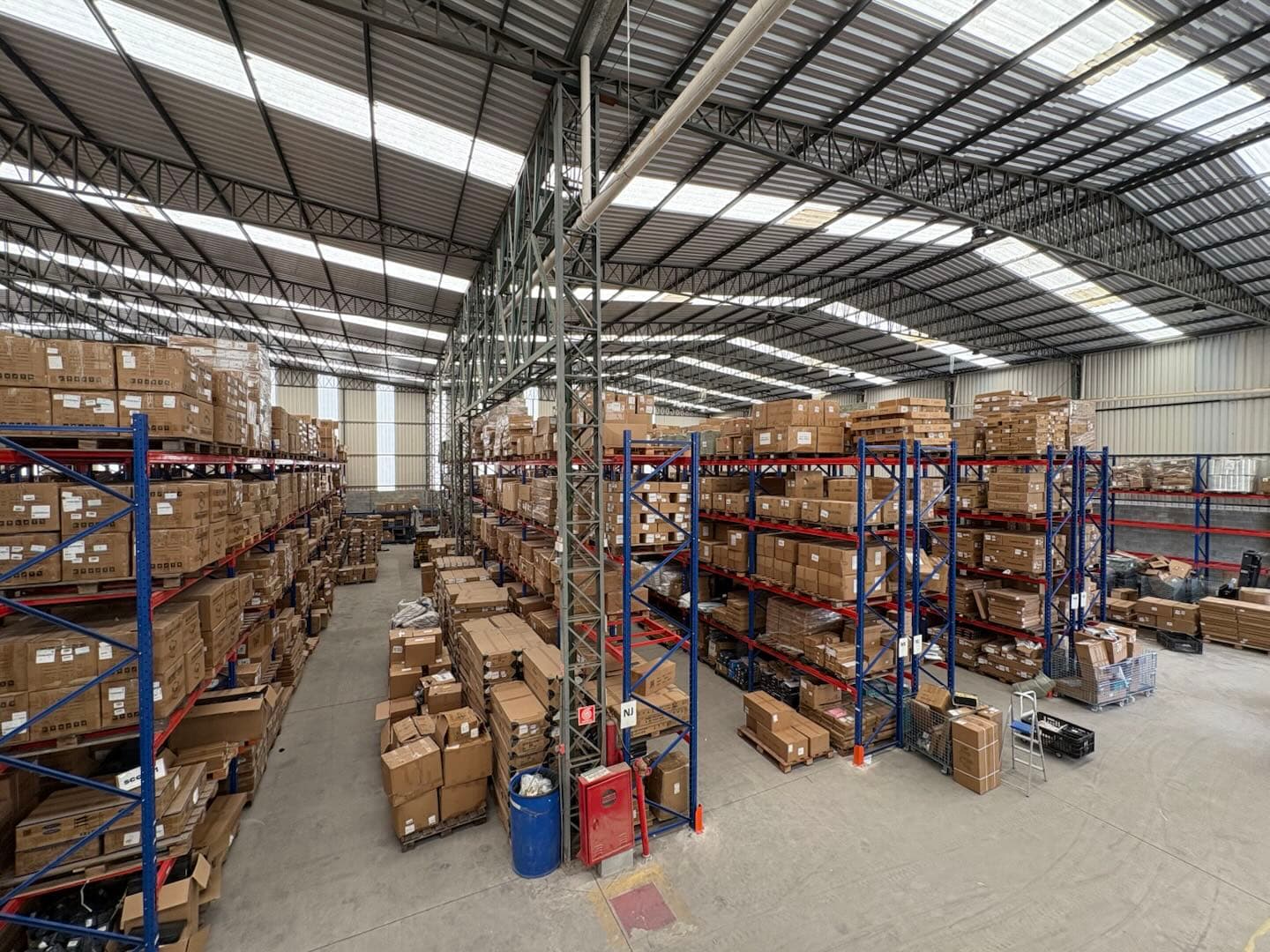
Parts are a different kind of stock
A spare part is usually ordered because something stopped working, so a missing part costs far more than its price: an idle vehicle, a lost delivery, an unhappy customer. At the same time, most parts sell rarely. The goal is to keep the few parts that matter always available and to order the rest when needed.
- A missing part can stop the customer's work
- Most parts sell only a few units a year
- A small group of parts accounts for most requests
Choose which parts to keep
Rank the parts by two questions: does the vehicle or machine stop without it, and how often is it needed? Wear parts that stop the work, such as tires, inner tubes, brake pads, cables and fuses, are kept in stock. Larger parts that rarely fail, such as a motor or a controller, are planned: you know the lead time and keep one or two only if a stop would be very costly.
- Stops the work and fails often: always in stock
- Stops the work and fails rarely: one or two units, or a planned order
- Does not stop the work: order when needed
- Review the list after each season with the real requests
How many to keep and when to reorder
For each part kept in stock, set a reorder point: the stock that covers the use expected while a new order travels, plus a safety margin for an unusual month. When the stock reaches that point, order again. For parts that come from China, the travel time is the production time plus about 50 days of import.
- Reorder point ≈ average monthly use × months until a new order arrives + safety stock
- Example with made-up numbers: 10 brake pads a month and 3 months until a new order arrives give a reorder point of 30, plus a safety stock of 10
- Measure use by the parts that actually went out, not by what you bought
- Record the model and serial number each part went to
Bring parts with every import
Parts are small and light compared with the vehicles or products they serve, so the cheapest way to restock them is in the same container as the next import. Plan the parts order a few weeks before each shipment closes, and add a few units of the parts that sold faster than expected.
- Order parts together with the next lot of products
- Check part numbers against the model and year
- Keep the parts list in Portuguese, with photos
What the law says about spare parts
The Consumer Protection Code requires manufacturers and importers to keep offering components and spare parts while the product is made or imported, and for a reasonable period after it stops. If you import a product or sell it under your own brand, plan the parts supply from the first order.
- Keep a parts list for every model you sell
- Agree with the supplier how long parts will be available
- Keep enough data to identify each unit sold
How XT Brazil works with parts
XT Brazil coordinates after-sales for the electric cargo tricycles it sells in Brazil: it analyzes the problem, supplies replacement parts and arranges repairs with workshops suited to the model. For products imported with us, parts can be ordered with each import and travel in the same shared container.
- Author
- XT Brazil Editorial Team
- Updated
- Oct 23, 2026
- Related page
- Electric cargo tricycles